
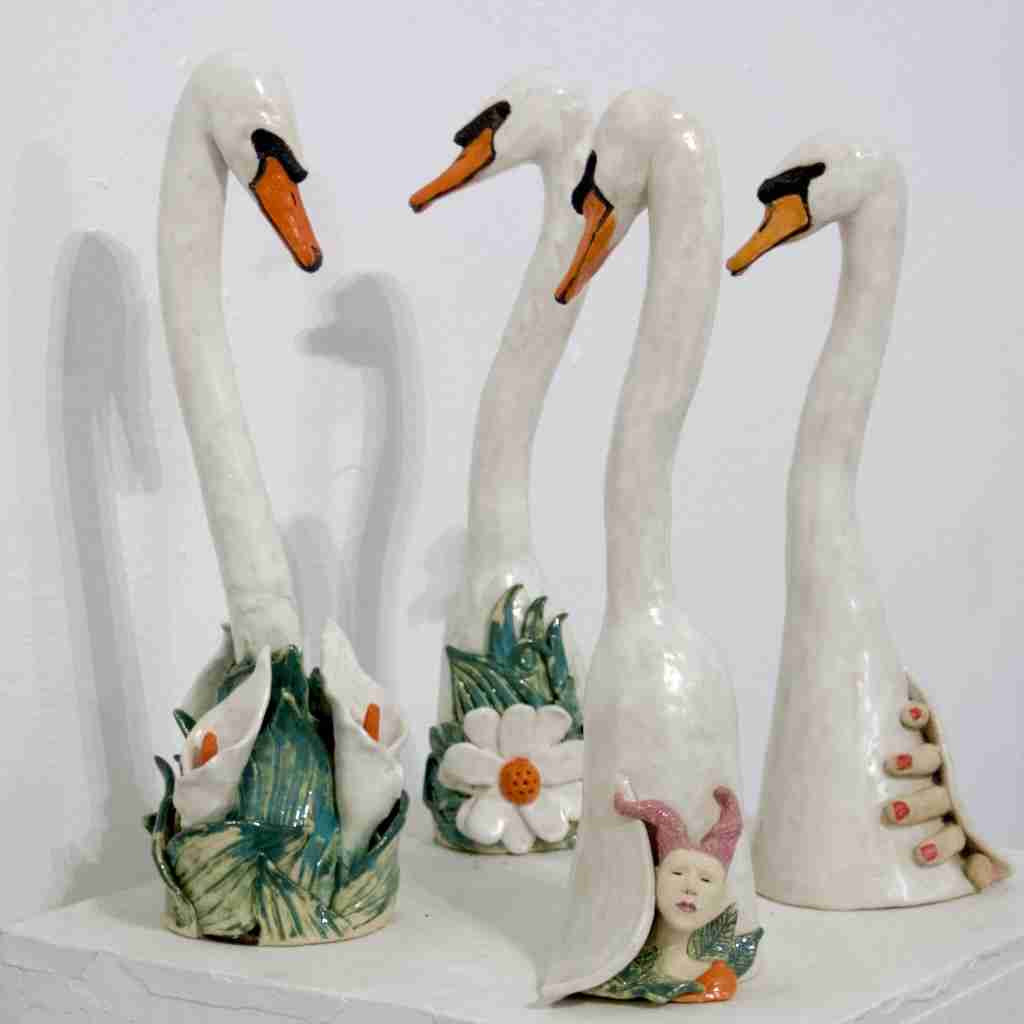
On sculpting erections, transformation and grace
I went through a lot in the making of these swans – from wrestling the wet clay to nervously listening to what sounded like an explosions in the kiln. Now they’re here: four elegant swans, telling their own quiet stories about transformation, grace, feminine power and otherworldly beauty.
The making of… ceramic art
Through reading about my experience you can pick up some helpful techniques (about the whole process) on how to make and fire ceramic art.
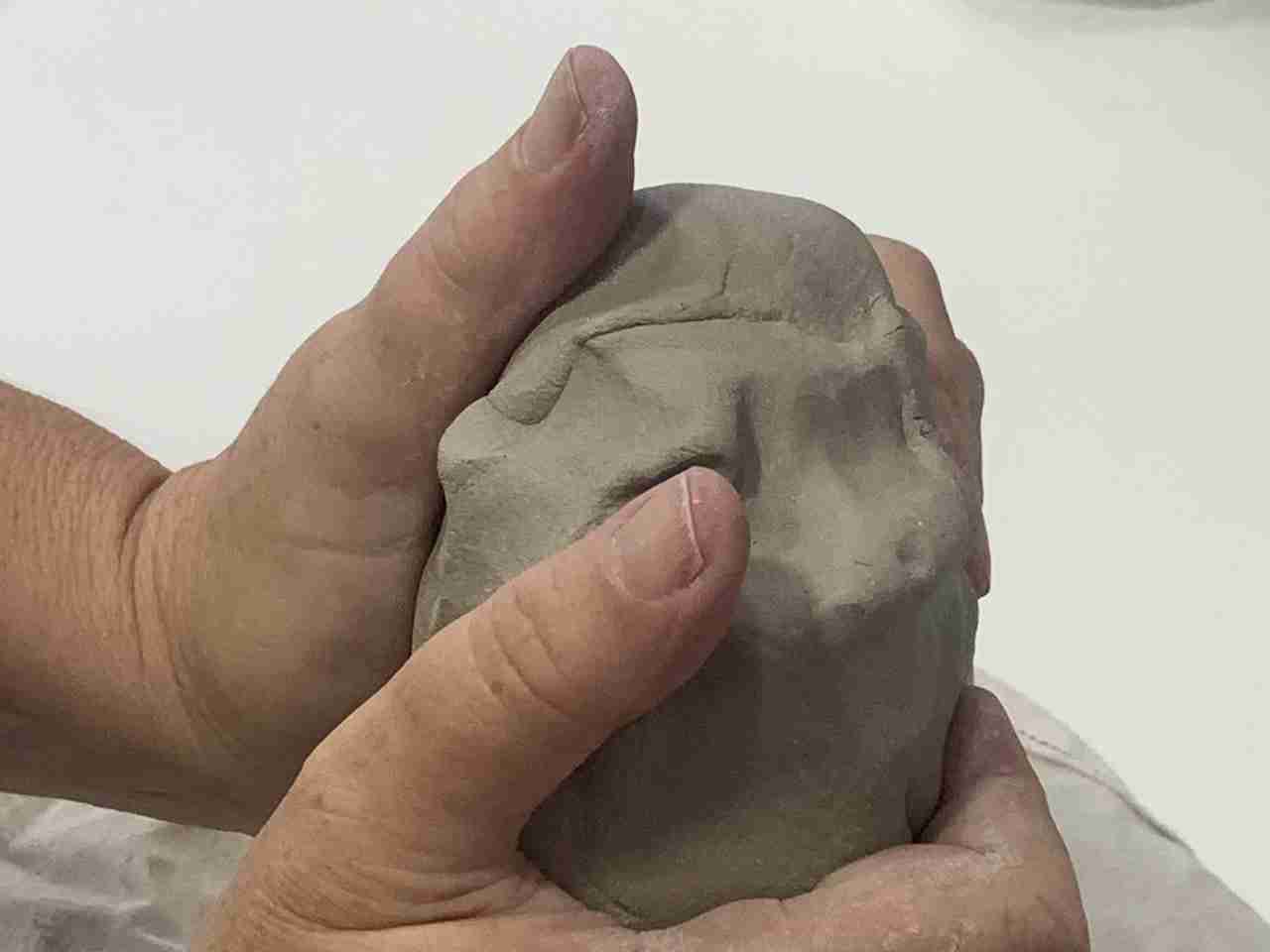
As I wrote in my recent blog, The Art of Not Thinking, I’ve been working without the conscious mind – letting my hands lead, allowing whatever wants to emerge through the clay. Unsurprisingly, and not for the first time, what emerged first was a large clay penis.
Disturbed but curious, I kept going. I sliced it lengthwise, hollowed it out and reconstructed it. Now I was faced with a huge erect cock. I decided to trust the process and go with it.
Catcalling and control
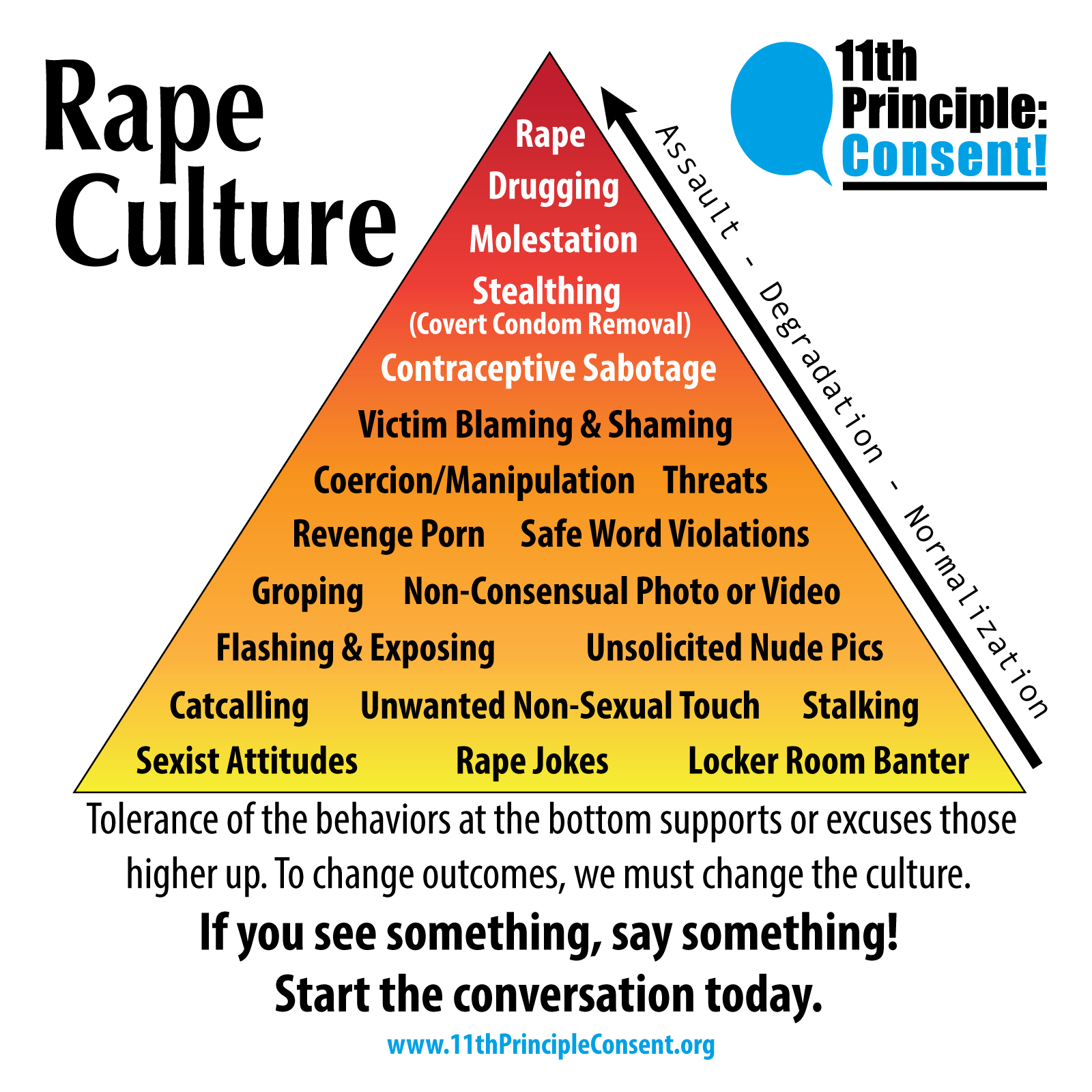
As I worked, my mind flashed back to a recent catcalling incident. A man (a friend of a friend) shouted from the driver’s window of his darkened people carrier at a group of young women: “Nice evening for an orgy!” I immediately confronted him about it and he said, “I was only joking.”
I replied calmly but firmly: “They didn’t think it was a joke. You scared them. That’s why they’re running away from you”
Catcalling isn’t a compliment – it’s about asserting sexual dominance. I was wrestling the clay willy into existence, while I thought about that.
Transforming the erection
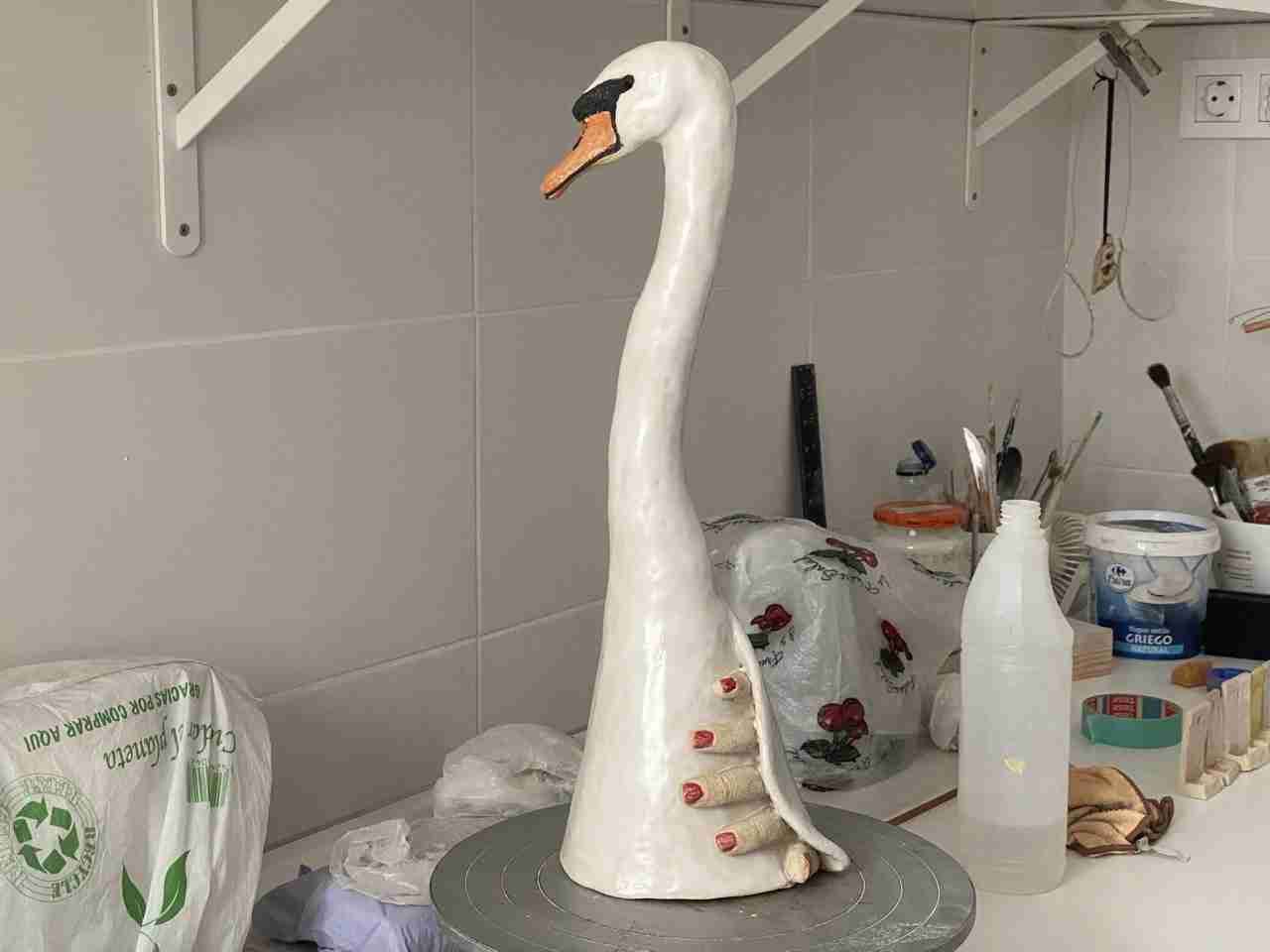
In a decisive move of symbolic circumcision, I sliced off the top of the phallus and anchored it to a base. And then – the spark – I transformed the tip by adding the head of a swan. It was majestic! The first swan was born.
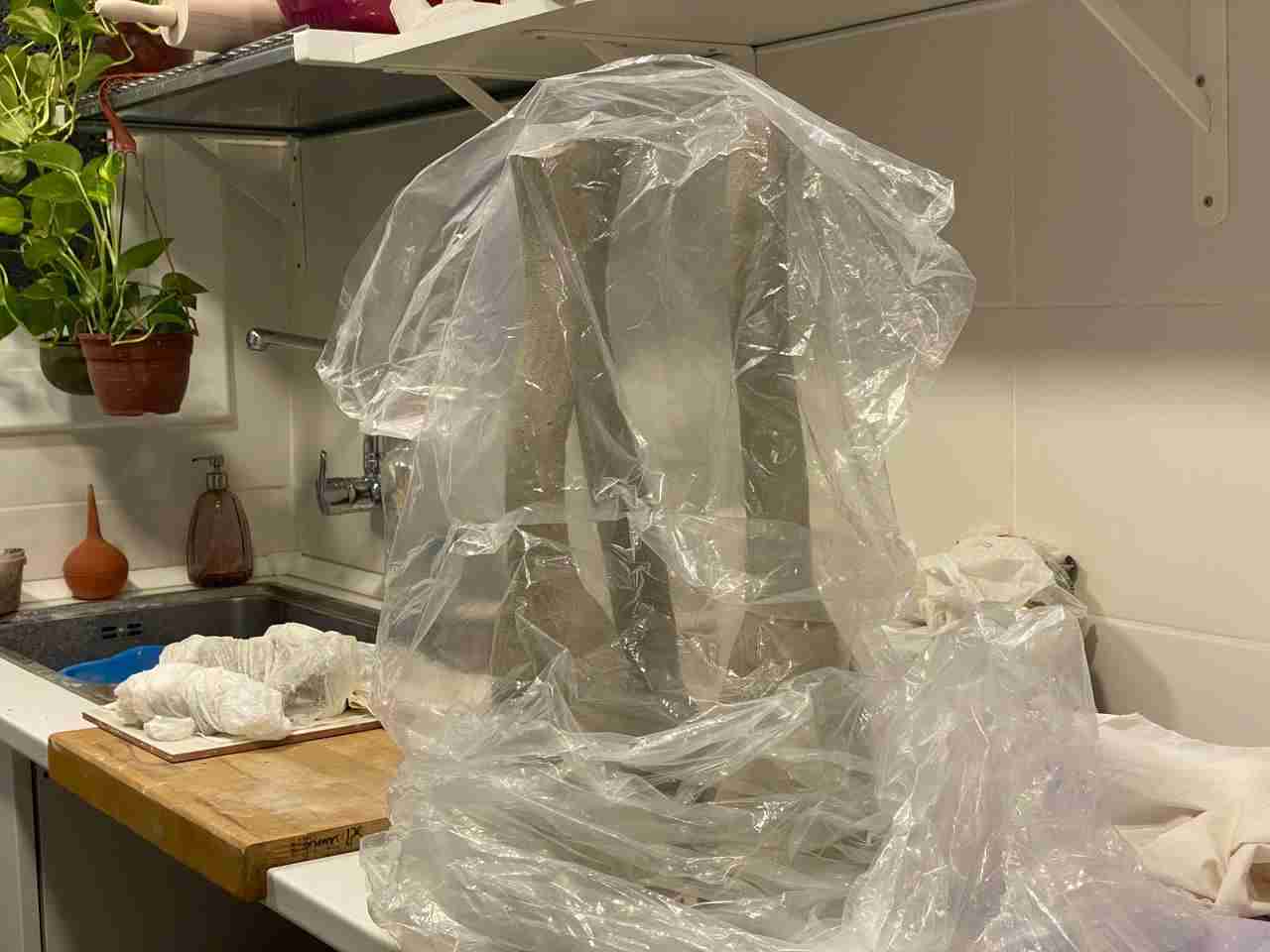
After the first swan was fired and ready, I began the process of sculpting some more clay, without overthinking. More elongated members emerged. One swan became two, then three. Clearly, no swan wants to be alone.
Raw glazing drama
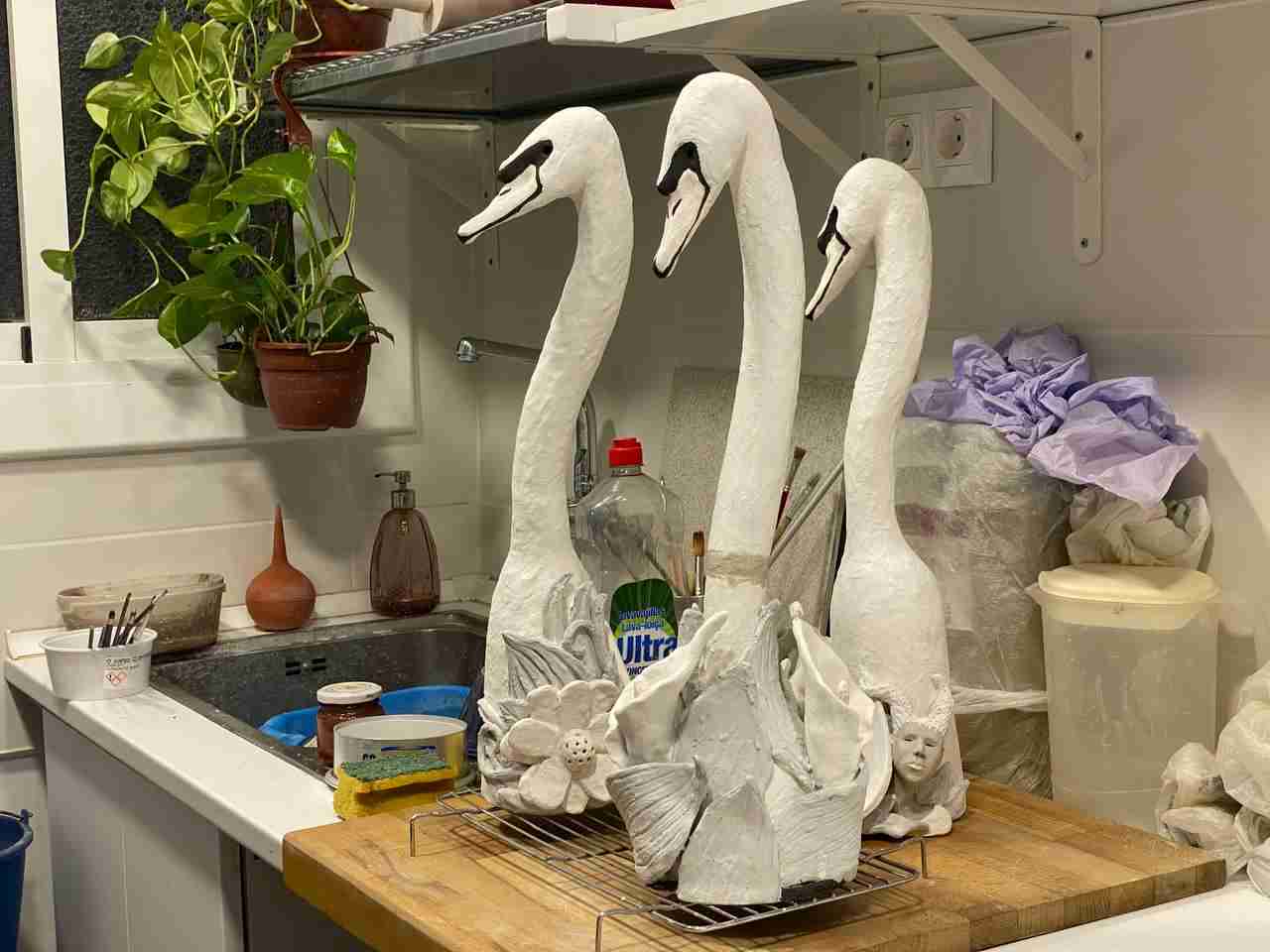
I raw glazed the remaining three – skipping the biscuit firing stage. While glazing one of them upside down, its neck came off clean in my hand. That was not a good time to try and speak to me. I sacrificed my evening walk, broke out the vinegar and made a clay slip with it. I etched vinegar into each of the two pieces, added some vinegar slip and reattached the swan’s proud neck with all the reverence it deserved.
By Friday night, I’d left the pieces drying on a rack, cracked a beer, and hoped for the best.
Candling the kiln – and my nerves
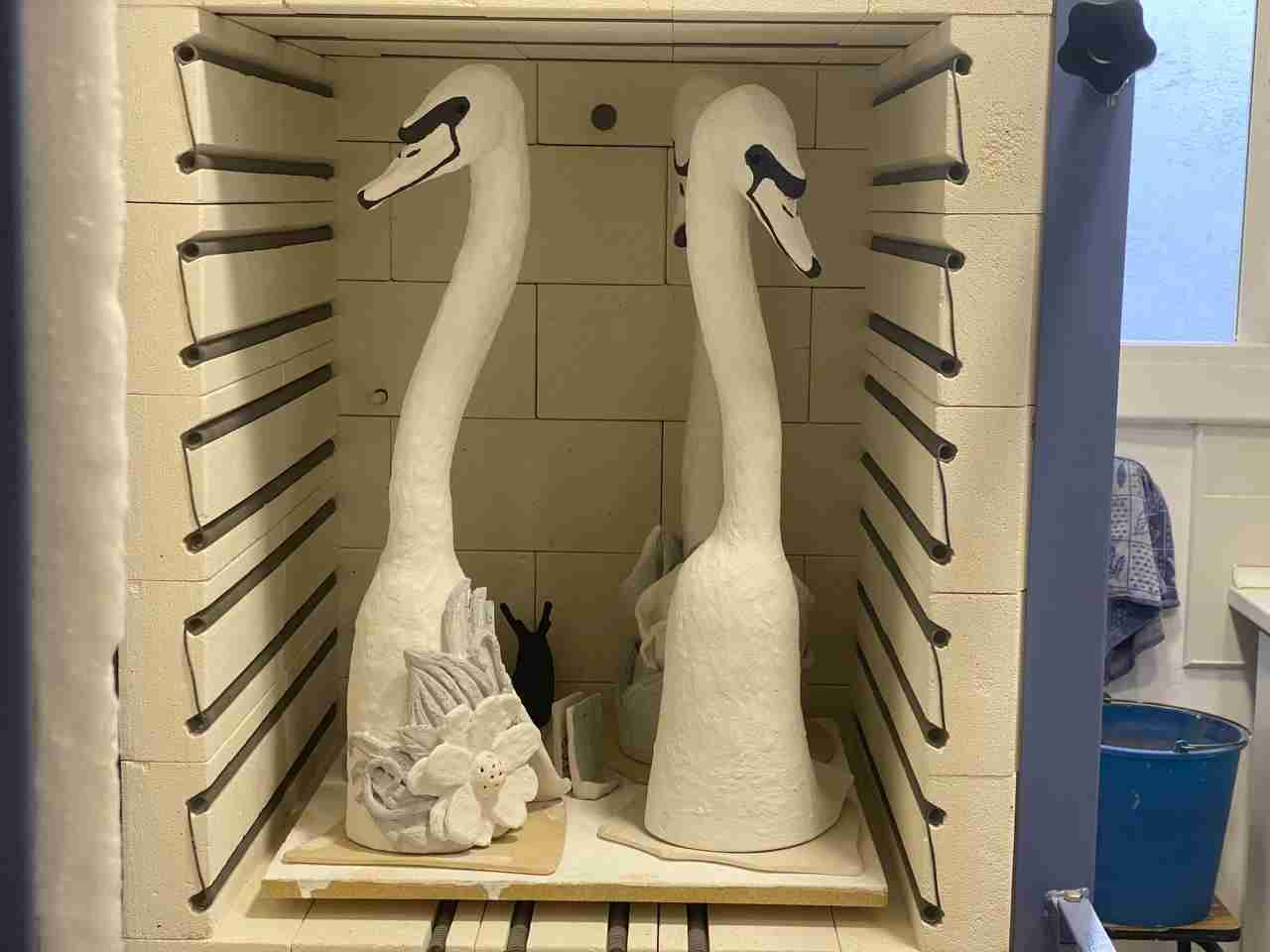
On Sunday evening, my careful hands loaded the kiln and I started the slow candling process – holding the temperature at 70°C for a couple of hours, to gently vaporise any remaining moisture. This step helps prevent explosions.
A few hours later, at 155°C, I heard something that sounded like a bottle smashing. My shoulders seized. My stomach flipped. Had I just destroyed weeks of work?
I kept going. I didn’t even think of stopping the firing mid-way. Over the next 11 hours, the kiln climbed steadily to 1260°C. For the next two days, I tried to get on with things, fretted and catastrophised. I imagined having to chip glaze shards off the walls of the kiln with a chisel.
On Wednesday morning, when the kiln was at 49 degrees, I nervously cracked it open, I peaked inside and to my relief, everything was fine!
Studio flashbacks
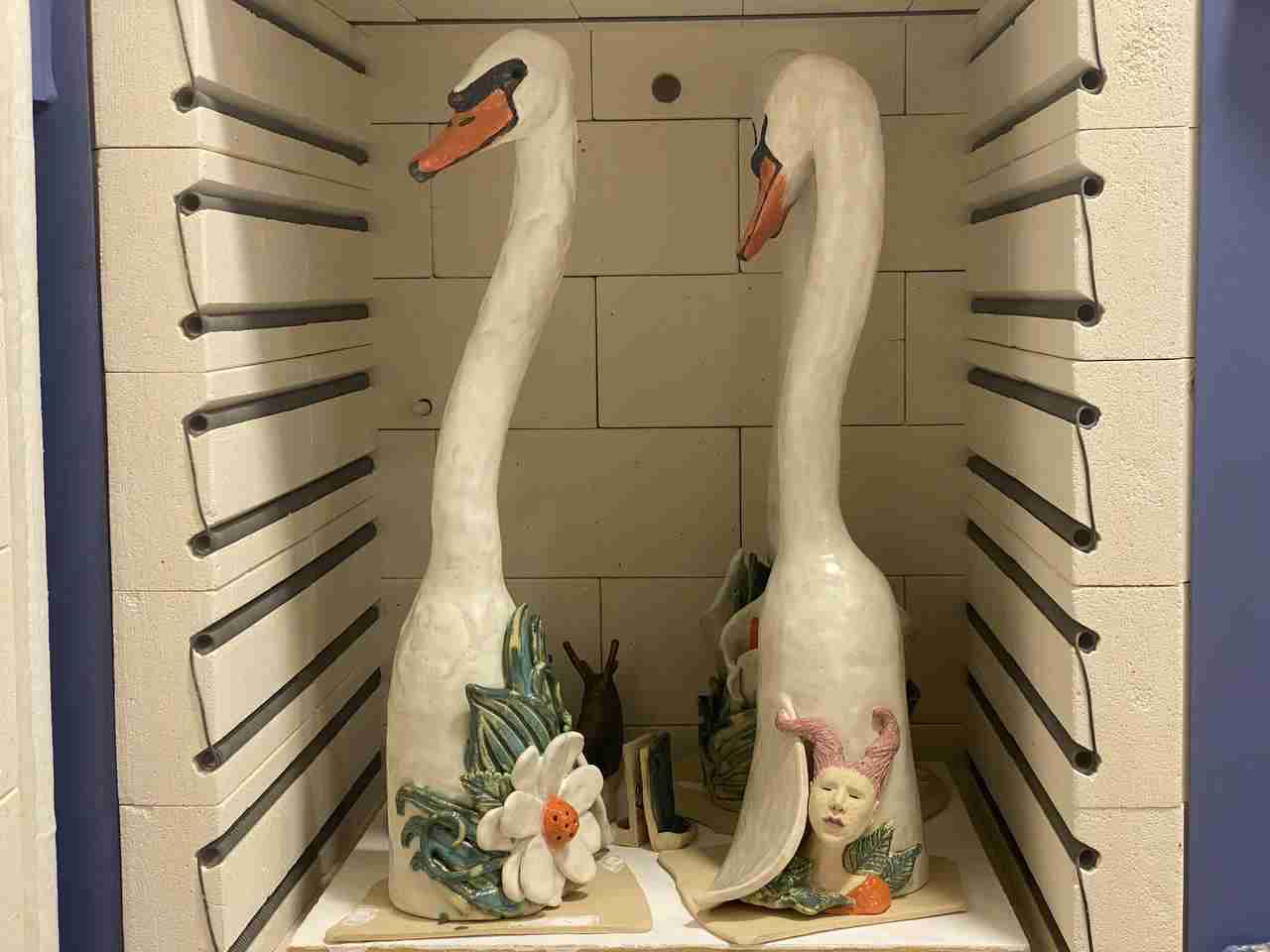
I used the raw glaze method all the time when I rented a studio space at artist Mandee Gage’s ceramic studio, in Bloomsbury, London, during my early twenties. It saves power and time – but it’s risky. You’re working with fragile, unfired clay. The swans lived on. The smashing sound I heard must’ve come from the neighbours.
Swans and the sacred feminine
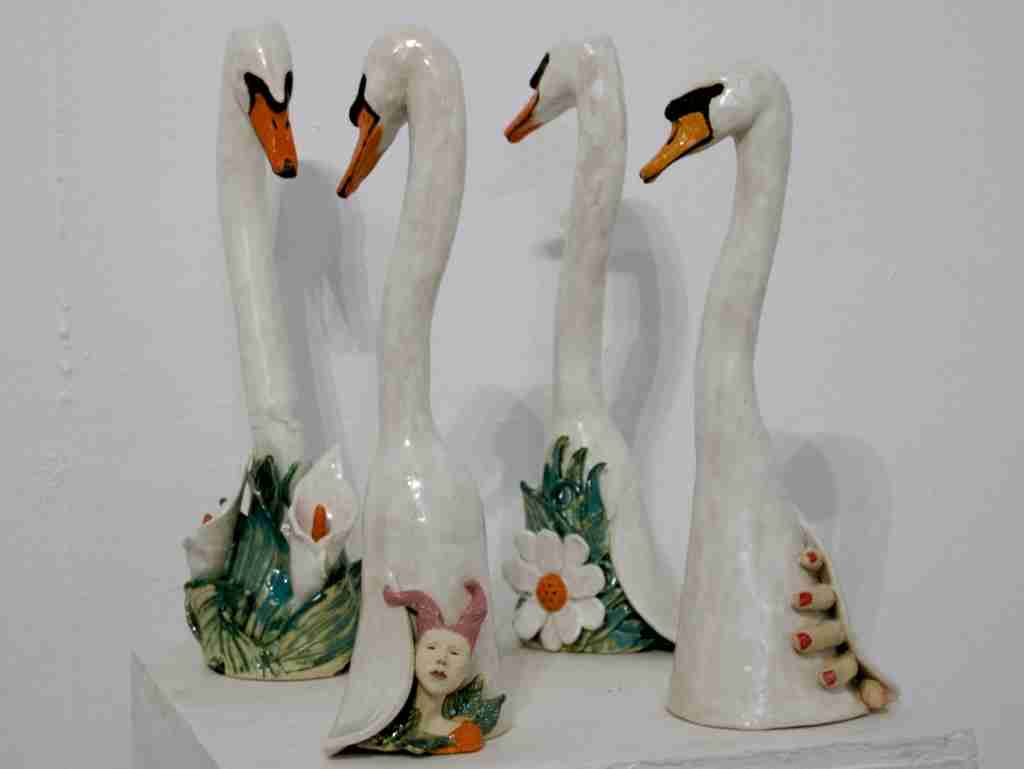
These swans are mythic. They speak of what’s ancient, sacred and what it means to face the difficulties of life head on and handle where we find ourselves.
They’re about reclaiming power – not through shame or denial but by transforming it into something elegant, unexpected and alive.
Click to buy these majestic swans!
The Irish legend of King Lir
A new friend told me the story of King Lir – whose four children were transformed into swans by their wicked step mother and exiled for 900 years. They endured unimaginable hardship, grief and separation – but they remained themselves. Their swan bodies carried grace, memory and resilience. They were reunited only in death.
The Slavic Goddess Lada
In folk tales and songs, Lada’s daughters or handmaidens are sometimes described as turning into swans.
The swan maidens
In Pan-Slavic and Norse folklore, the swan maidens are divine or magical women who wear swan feathers and can shape-shift between human and bird form. A common trope is a man stealing her feathered cloak so he can keep her.
Grace
To me, these sculptures embody beauty, strength and resilience – they speak to the quiet power of inner survival and the deep knowing that we are capable of enduring and thriving. The long, curving necks (yes, still unmistakably phallic) are softened by the delicacy of the floral forms. As one friend observed, “the flowers are the feminine – grounding all that glorious masculine length.”
Buy me a coffee
You may not want to buy my sculptures right now but your support means a lot to me and by buying me a coffee it not only encourages me but also helps to fuel my artistic journey financially.
Leave A Comment