
Size: 40 x 40 x 30cm high
Materials: glazed stoneware ceramic
Weight: 10.13kg
Date: 2026
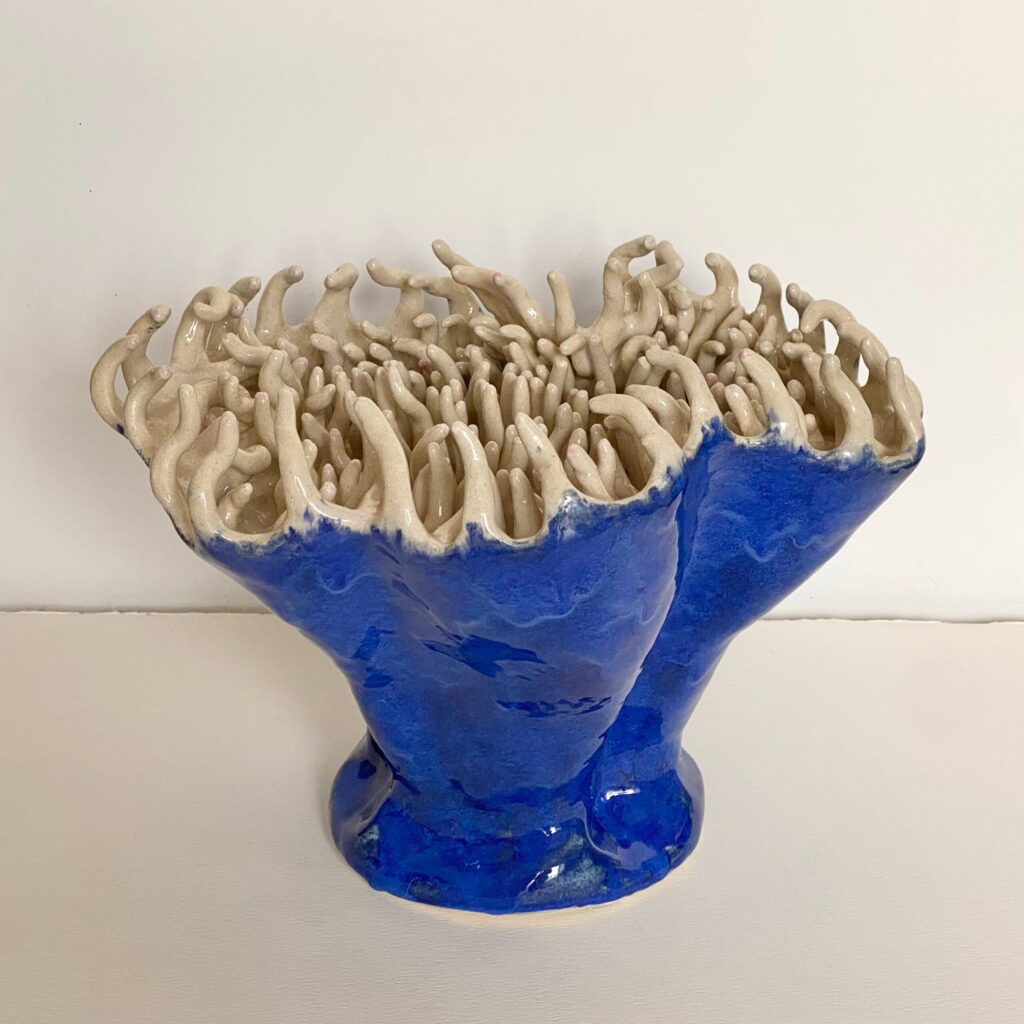
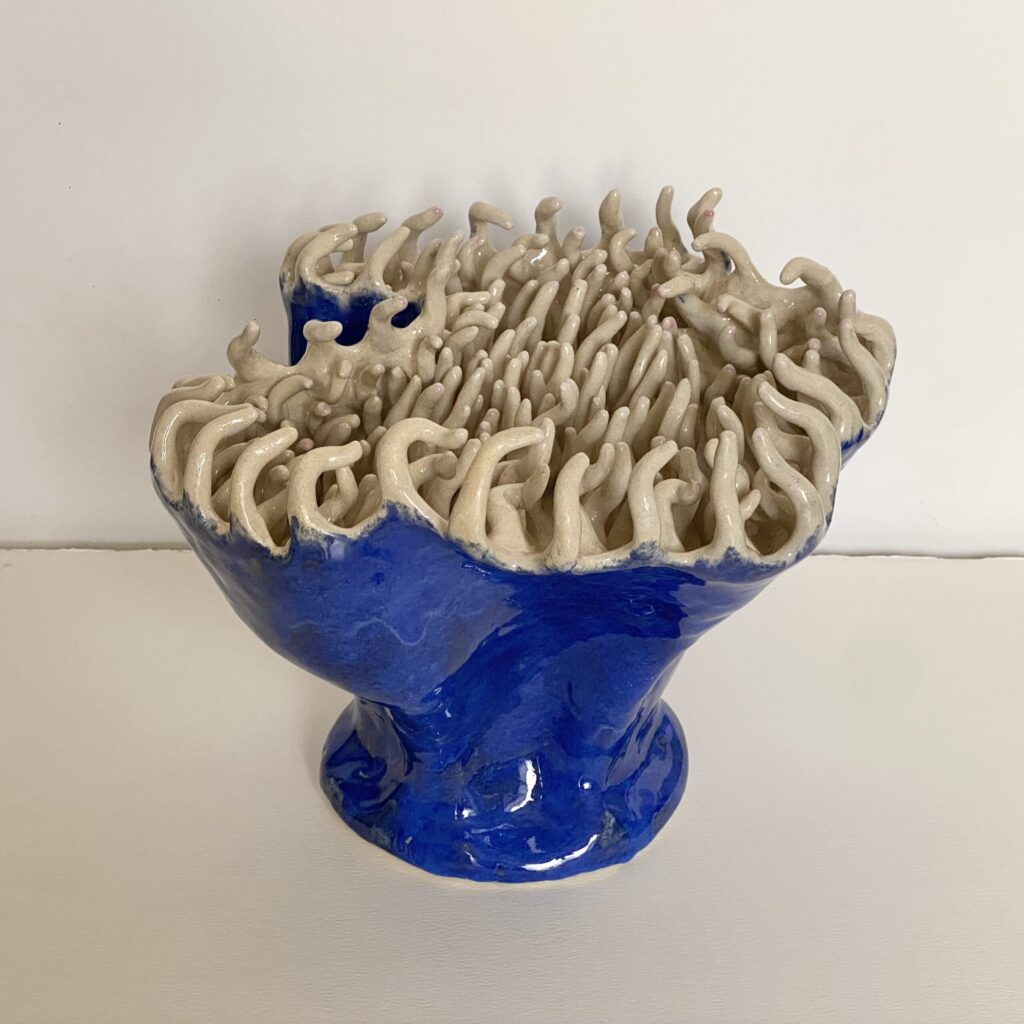
Magnificent sea anemone
€ 400
1 in stock
1 in stock
Description
Blue swaying sea anemone sculpture based on Heteractis magnifica, also known as Radianthus magnifica
I first encountered a field of this species off a Thai island in 2023, during my first scuba dive. The upturned swaying blue skirts totally captivated me, and I couldn’t understand why nobody else in the group was taking much notice. It’s still one of the most beautiful sights I have ever seen, so naturally I made one in ceramic.
A complex sculpture to make
This sculpture is close to life size, though smaller than the ones I saw, because it had to fit in my kiln. The column was difficult to make, as gravity kept making the large slab slump. I persisted and added interior structure. Sculpting and placing the many muted beige tentacles was also a labour of love. It hung around in my studio for a while but I finally got around to fixing the patchy electric-blue glaze. I fired it again to 1260°C (cone 9). Now I’m totally enamoured with it.
Information about the magnificent sea anemone
Magnificent sea anemones live in tropical Indo-Pacific waters. Venomous tentacles cover the flared oral disc, and their stinging cells, called nematocysts, fire at prey. A typical anemone measures 20 to 50cm across, but some reach about a metre. Anemones clone themselves by splitting, among other methods, and also reproduce sexually. You can find them alone or in clusters.
They can live for decades, possibly much longer, though nobody has confirmed it. Anemones show very few signs of ageing, so people often call them “essentially immortal”. Their main threats are disease, predators, heatwaves and extreme pollution. Anemones also regenerate well, regrowing lost tentacles or repairing a damaged body.
If an anemone doesn’t like where it is, it can creep slowly on its adhesive pedal disc. It can also detach completely and let the current carry it to another hard, well-lit surface to make a new home.
Mutually beneficial partnerships
Anemones have two symbiotic relationships. The first is with anemonefish (clownfish), which gain protection among the tentacles. In return, the fish help the anemone grow and survive. Some research suggests the fish also stir the water at night, bringing in oxygen, and add nutrients through their waste. The second relationship is with microscopic algae (zooxanthellae) living inside the anemone’s tissues. The algae provide a large part of its energy.
Warming seas
As I learn more about the destructive effects of global warming on marine life, the more I despair. When sea temperatures rise, anemones can expel their algae and turn pale. This is called bleaching, and it can weaken or kill them.
Additional information
| Dimensions | 60 × 60 × 50 cm |
|---|



Reviews
There are no reviews yet.