
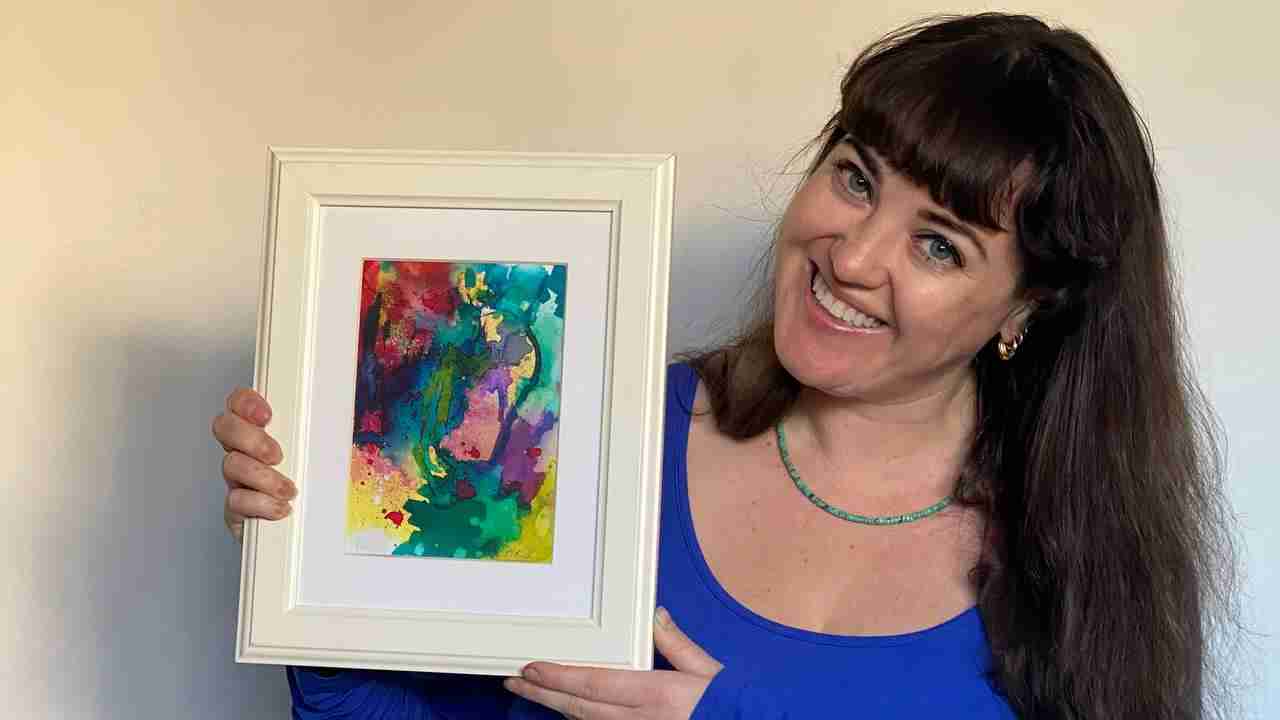
This is part 2 of a blog post which started off as a lesson plan. You can find out some of the many things that you can do to promote selling your art, from writing descriptions to uploading your art to various online sales platforms. Read part 1 to learn about the initial techniques of making art, through to photo re-sizing and fine art packaging. Art classes are tailored to your needs and materials can be provided.
Online presence
Make your brand
- Name: decide on exactly how you want to present your name and sign it
- Domain name: buy your domain name (even if you don’t use it), keep the name snappy (I use Ghandi.net to buy domain names). You can use this as your email. Your domain name is your first level SEO, that’s why I chose .art rather than .com
- Logo: draw a simple logo and make it into vectors (we can do this together)
- Colour: choose an accent colour that works with black, white and grey
- Typeface: choose a common typeface that will be available of all software
- Portrait: Take a well lit self portrait and use it on everything
- Image: choose an image that represents your art and re-size it for use on banners and headers
Marketing
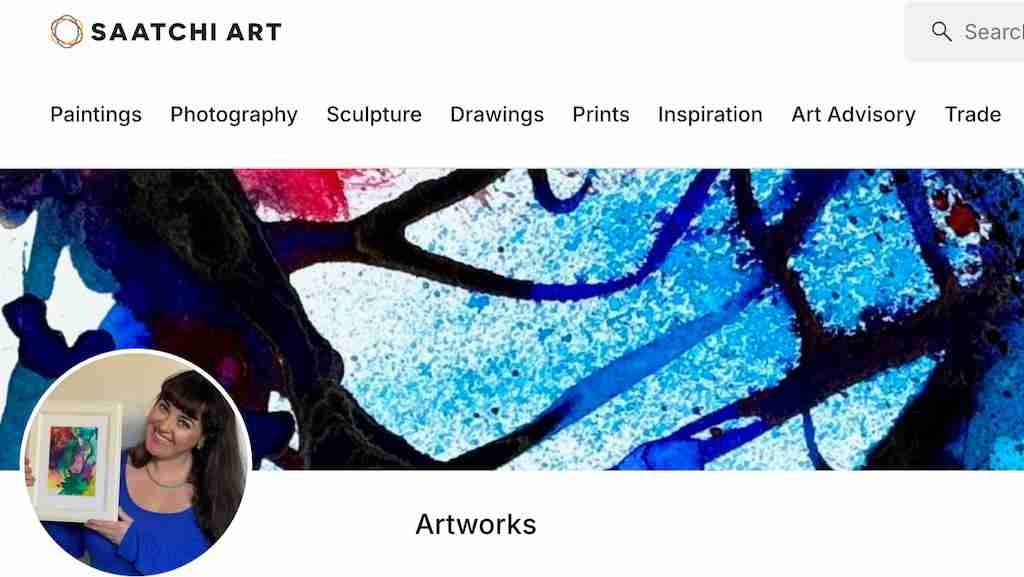
Maggie Field’s profile pic and banner image
Be consistent with your visual representation over all platforms. Make accounts on all platforms, even if you don’t use them right now, you don’t want other people with the same name taking your spot. You need to advertise on platforms where art lovers are already looking. LinkedIn, Youtube, FB page, instagram, Saatchiart, Pinterest and (if you don’t mind your personal details being sold and your biometric details being harvested) Tick Tock.
Use a link on each of your social media posts to drive traffic to your website or art selling platform. Use a strong image and or a short video and write 100 words descriptions with each post as Google likes text. Engage with your art loving audience, ask open questions starting with – How, What, When, Where, Why? Communicate clearly that they can buy your art.
Art newsletters
Newsletter writing is important, it’s about keeping your followers up to date and informed about what you are making and your art journey. Write like you are communicating with a good friends sister who you haven’t met — explain things well, don’t assume people know you and what you are doing. To create content, do some free writing about your new art and art adventures. Link to your selling platforms.
Mailchimp
I use Mailchimp.com and this is where I securely store the mailing list email addresses that I collect over the years. I can keep them on a different mailing lists like, Exhibition Invites, Regular Mailing List. Ask permission before adding people to your art newsletter mailing list. You could do worse than signing up to my art newsletter and check out my tried and tested template, read my communication style and follow my artistic journey.
Pacing making your art public
Even though I might get a batch of art completed in one go, I prefer to drip feed a piece weekly rather than saturate my market with art dumps. This gives people time to digest each piece of my art and the art gets it’s own moment to shine!
Keywords
What words would you use to find the painting in a google search? Colours, subject, style, feeling. Pepper these words into your descriptions. Fill in the alt text field when uploading images to help the search engines identify your images.
Hashtags
Hashtags are a really effective way of grouping similar content. For example if you are a fan of abstract watercolours then you can see what people have posted when you put #abstractwatercolours in the search. Research which hashtags to use, see which ones similar artists are using. Add them into the description. I have a blog about hashtags. https://emmaplunkett.art/art-blog/how-to-use-hashtags/
Social Media
Use the social media sites that you enjoy the most, that way it’s not so much work for you. I prefer Facebook and Instagram. Sometimes I get around to using LinkedIn. I also try out and test new sites when they come around.
This is your main portfolio, it’s where you can easily access your art to show art lovers you meet when out and about. You can use your profile link when entering open calls for art exhibitions and competitions. Make an account just for your art, so that when visitors arrive on your profile, they don’t have to wade through tons of unrelated topics, like images from your last holiday. Make a second account for your life, here you can post things that you’ve seen and experienced. Make a third account for the art you like and want to keep as a reference. This third account sets you up as a curator and it’s a good place to keep art that inspires you. Remember to always add the artists name, other relevant details and why you like the work.
Make albums for your work, include similar artworks from other artists that relate by materials or theme. Direct people to your website or ETSY shop with a link in your post description.
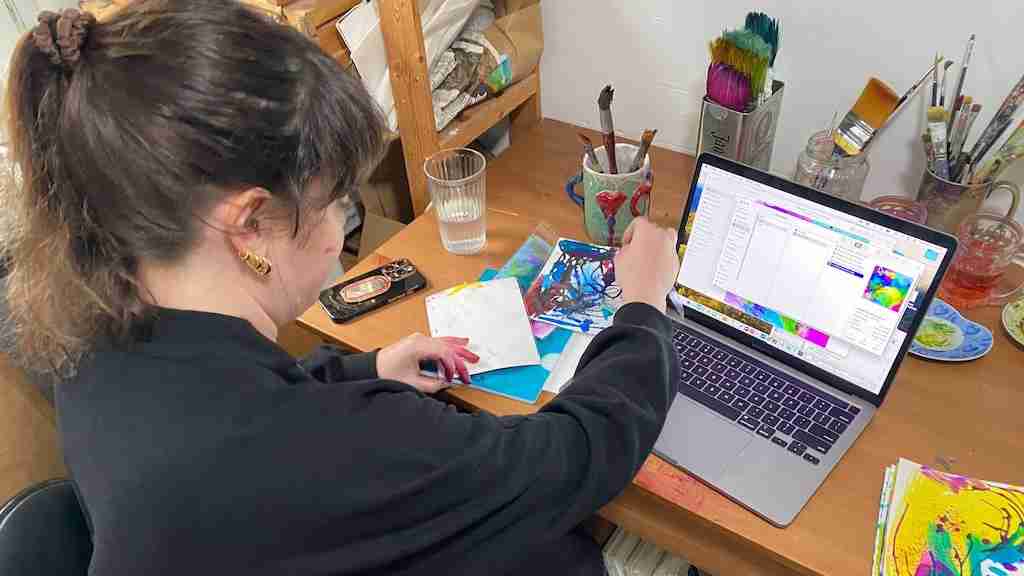
Student learning!
Selling art
Art lovers buy artists – it’s not just about the artwork, they want a piece of you! Collectors buy art from artists they know. They observe what you make and wait for the right time to buy a piece from you. When you meet a future buyer, acknowledge their presence by saying, “Hello”. Get to know your art audience and let them get to know you – make friends. Ask questions about what art they like. Do they have an existing art collection, what styles do they like? Don’t tell them so much about your art, let them discover it and tell you what they think of it. Get them to look at it slowly and make a connection with it. Observe the golden silence. If possible ask them how much they would be happy paying for your art – they might give a higher number than you would normally ask for.
Saatchiart
This is an online selling platform where they give you 60% of the selling price. They have a lot of information and tutorials to help guide you through selling your art online. They send a courier to your door to pick up the packaged artwork. They have great SEO and excellent customer service. Collectors can order prints of your art and have them delivered without you doing any admin. Get your tax information together ready to make an account. You will need to upload your full size images.
Printful and ETSY
Printful.com has several drop shipping depots around the world. They have good quality products that you can create your designs on and put in a shop and connect it to your ETSY shop.
Instant downloads
Etsy is a good place to set up instant downloads of your art. This means art lovers can pay to download a file and take it to their local printer. By doing this they avoid shipping costs and you avoid admin time.
Art theft
Copyright Law
The maker of an artwork is the author and automatically is the owner of the copyright. Don’t sell your copyright if you can help it but instead sell permissions to use the work in the form of regular or extended art license. Observe the wording closely in this example of my regular art license.
Stolen art
Take it as a compliment that someone went through a lot of risk to obtain your work without paying. You can always make more! I know it’s upsetting though.
Online art theft
Do reverse image searches for your artwork and be polite when you find people who rip off your art. 99% of the time they are just ignorant of copyright laws. If they are putting your artwork on a product and making money from it, then ask them to buy a license from you. If they are just using it for a worthwhile project, ask them to give you a credit. In extreme cases you can threaten them with the Digital Millennium Copyright Act (DMCA).
Art for free
As long as people are not making money from your art then let people use digital copies of your art for free, it’s advertising for you and gets your work out there. We live in the information age and we receive a lot of information for free, so it’s only fare to give a little back into the mix and embellish people’s lives with our art. So, don’t use watermarks to spoil your images. Especially let charities and good causes use your art, as it get’s your name and artwork in front of people and you get to network.
Printing
A3 art prints
Photograph your artwork with an SLR camera that can do a minimum of 4-5000 pixels (you cannot add pixels later). Prepare the image for printing by cleaning the image up on the computer by zooming in x 400 and take out any dust or hairs. Export the file in the highest resolution. Modern 6 colour printers can print straight from jpg. Do a test print and check the colours with the original and what it looks like on your screen. Be faithful to the colours of the original painting as much as possible.
Greeting cards
How to make a greeting card blog post: https://emmaplunkett.art/art-blog/tips-for-making-printed-greeting-cards/
Find a printer’s with a good selection of paper, ideally 240g glossy one side and matte the other. Or find a printer’s online. Order the cello bags online, make sure the size matches your card size. Think about selling bundles of cards and how you’re going to display them in shops.
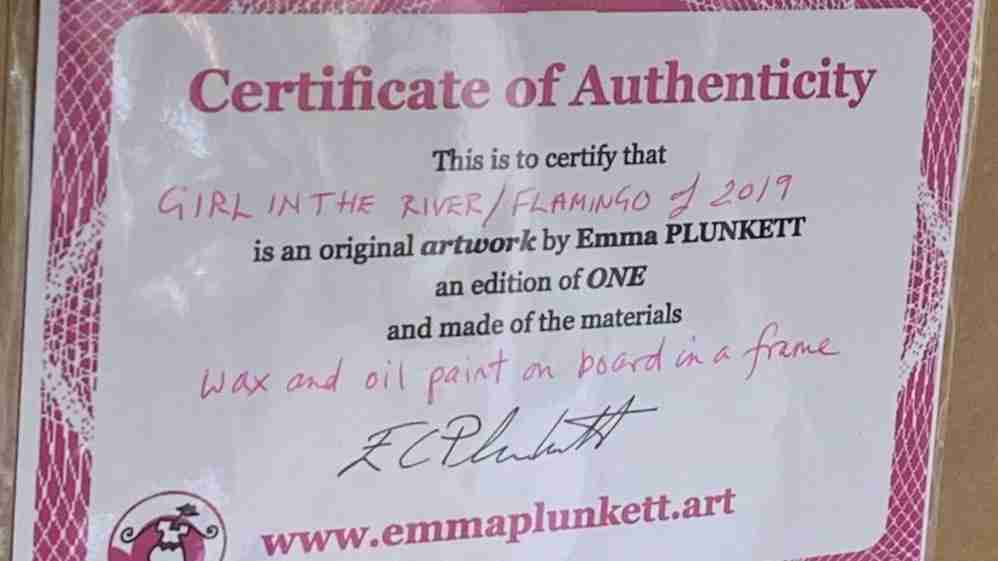
My authenticity certificate!
Authenticity certificate
Buyers like to have a certificate to authenticate their purchase. I print up a bunch that i can then fill in the details with pen. I attach these to the backs of the paintings or in with the freebie envelope of a sculpture.
Freebies
You can get small runs of stickers, badges and postcards made of your art. Give them out with each art sale. Include a link or your name where possible.
Art lesson – making and selling (part 1)
Read part 1 of this lesson plan and learn about making and photographing your art.
Feedback
I know there’s a lot more to selling art than what I’ve outlined here but it’s a start. If you have found this blog helpful, please leave a comment, recommend my website and art newsletter to a friend and consider buying my art. I’m also open if you want to book a video consultation or a tailored art class with me.
Leave A Comment